





As the foundation of a seemingly boundless range of modern technologies, semiconductors are all around us, from everyday electronic devices to essential infrastructure. Semiconductor stocks are shares in the companies that design and manufacture computer chips, offering traders access to a fast and ever-growing sector whose growth is being fuelled by the growth of artificial intelligence (AI).
This article will cover all the essentials of trading in the semiconductor industry. This includes the different types of semiconductor companies, which industry developments typically drive the sector, how traders can gain exposure to it and the main risks that traders should expect.
What Are Semiconductor Stocks and Why Do They Matter?
Semiconductor stocks play an essential role in the global economy as they represent an essential component of many major industries. From computing and smartphones to automotive technology, data centres and AI, semiconductors are absolutely essential to the day-to-day functioning of the modern economy – and our daily lives.
As demand for digital technologies and advanced computing continues to grow, semiconductor companies have become increasingly important within global equity markets.
Their strong growth potential, technological innovation and exposure to key long-term trends such as AI, cloud computing and electrification make them significant drivers of both market performance and investor interest.
How the Semiconductor Industry Works
The semiconductor manufacturing industry operates in clear cycles and with a clear supply chain across a global network. Each of the semiconductor industry companies has its own distinct role and while no company does the same job as another, the network is intertwined and each supplier depends on one another.
Chip Designers
The companies that design semiconductor chips create the processors and other integrated circuits that power modern technology. This covers a wide range of roles from connectivity, modems and memory to connectivity chips, embedded semiconductors and storage chips.
Chip designers develop the architecture and functionality of these components, determining how they process information, communicate with other devices and manage power.
Some companies focus on specialised chips for areas such as AI, data centres, smartphones, automotive systems and consumer electronics, while others produce more general-purpose processors and microcontrollers. Major chip designers include NVIDIA, AMD, Qualcomm, and Apple.
Semiconductor Manufacturers and Foundries
Some companies known as integrated device manufacturers (IDMs) both design and manufacture their own chips, giving them greater control over manufacturing capacity and technology. Others may outsource manufacturing or, in the case of foundries such as Samsung, manufacture and produce chips designed by other companies.
The foundry model allows companies that design chips to have them manufactured by specialist companies, without having to build and operate their own expensive factories, representing a a crucial role in the global semiconductor supply chain.
Semiconductor Equipment and Suppliers
This covers those companies that provide the equipment and services needed for chip production such as software, components, materials and services. Semiconductor assembly and processing equipment companies are integral to this part of the supply chain, helping manufacturers turn designs into finished chips.
These companies provide highly specialised machinery used to build, clean, test, inspect and package semiconductors during the production process.
Others supply the silicon wafers, gases and chemicals required to manufacture chips. Because semiconductor production relies on complex and precise technology, equipment and material suppliers play an essential role in maintaining production quality and efficiency.
How the Semiconductor Sector Drives Global Markets
The semiconductor sector is growing at a rapid pace, with global chip revenue more than doubling in the past decade reflecting the huge strides in demand. Its power lies in the fact that it is interlinked with so many global superpowers including technology, AI, data centres, automotive manufacturing, telecommunications and consumer electronics.
There are a number of key drivers of semiconductor sector growth focused on the fact that expansions in technology and government investment into industry is making chips more powerful and advanced than ever.
AI and Technology Demand
The advent of AI has led to one of the biggest technology booms in recent history. As demand for AI grows rapidly, the need for increasingly powerful and advanced chips is growing too, creating strong demand for the companies that design and manufacture them.
AI models require a colossal level of computing power, and this need is driving major investment into specialised processors, data centres and supporting infrastructure. Growth in cloud computing, machine learning and other data-intensive technologies is further increasing the need for high-performance semiconductors.
As businesses and consumers adopt AI across more areas of the economy at a rapid pace, semiconductor demand is likely to remain closely linked to the continued development and adoption of these technologies.
Supply, Demand and the Chip Cycle
Demand for chips can rise and fall dramatically as it is tied so closely to economic health and behaviours. Shortages, excess supply and changes in demand can all affect semiconductor companies and share prices, which makes it essential to diversify trading interest across different areas of the semiconductor sector.
Geopolitics and Global Supply Chains
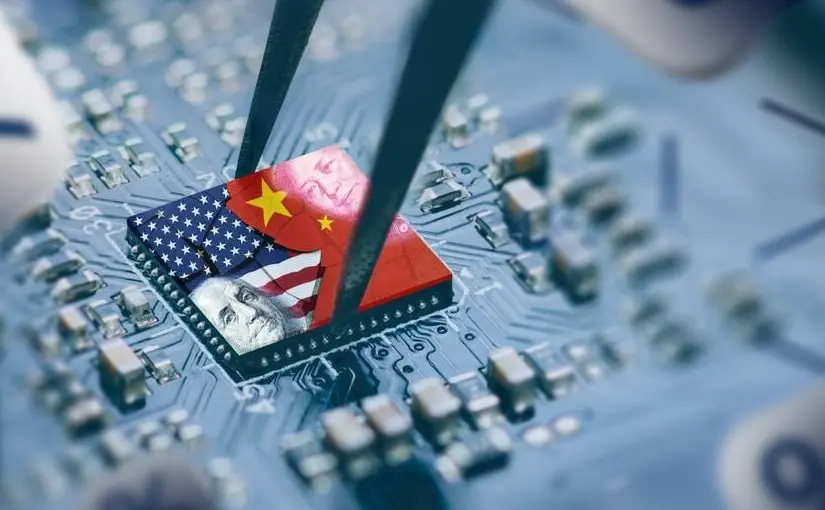
The strength and weakness of the semiconductor industry is that it has a high degree of exposure to geopolitics because chip production depends on a complex global supply chain.
This means that trade restrictions or any other disruption to the supply chain such as export controls and tariffs can limit access to advanced technologies, equipment or markets, increasing costs and slowing production.
Geopolitical developments such as instability and tensions can also disrupt key manufacturing and shipping hubs, while shortages of critical materials or equipment can put undue pressure on companies at every stage of the supply chain.
Semiconductor companies react swiftly to the issues, with solutions such as diversifying suppliers and expanding production across different regions.
How Can Traders Get Exposure to the Semiconductor Sector?
There are two key ways that traders can gain exposure to semiconductor companies and the wider sector. They can either choose exposure to individual companies by directly investing in the stocks of specific companies, or they can invest via an ETF for broader sector exposure.
Individual Semiconductor Stocks
Individual stocks provide exposure to specific semiconductor companies, such as chip makers, foundries or suppliers. This trading route is time- and research-intensive as stock performance can depend on company-specific factors.
This typically includes looking at income statements, valuations and earnings per share growth over specific periods for specific companies. As with all stock trading, it also means keeping informed and aware of wider and more niche economic events that may impact stock performance, such as changing trade policies and macroeconomic trends.
Trading with semiconductor stock directly with individual companies is typically more suited to those traders with a longer-term outlook as well as those with the time and inclination to invest in researching and staying informed about the markets.
Semiconductor ETFs
For those seeking a less intensive and potentially shorter-term trading option, semiconductor ETFs can provide exposure to a basket of companies across the industry rather than relying on a single stock.
This is also (usually) a more cost-effective way to diversify rather than directly purchasing a basket of different stocks to diversify. Traders typically capitalise on short-term price movements and changes without any need to own the underlying shares.
Semiconductor Sector Indices
Semiconductor-specific indices track a group of companies involved in the chip industry and can be used to monitor the overall performance of the sector.
A semiconductor sector index provides investors with a broader view of semiconductor stocks rather than focusing on individual companies, helping to identify industry trends in the industry and assess how the sector is performing in relation to the wider market.
These indices may include chip designers, manufacturers, equipment providers and semiconductor suppliers, giving a comprehensive industry overview.
Semiconductor Stocks & Semiconductor Sector FAQs
Which Are the Best Semiconductor Stocks to Invest In?
With AI developing at such a rapid pace, the best semiconductor stocks are widely considered to be those integral to developing artificial intelligence infrastructure. Nvidia Corp (NASDAQ: NVDA is by far the market leader in this niche with their leading competitor being Advanced Micro Devices Inc (NASDAQ: AMD).
Which Are the Best Cheap Semiconductor Stocks?
For investors seeking opportunities regarding cheap or undervalued semiconductor stocks, Micron Technology (NASDAQ: MU) and the Taiwan Semiconductor Manufacturing Companhy (NYSE: TSM) provide a good starting point in the mainstream market.
What Are the Risks Linked to Trading Semiconductor Stocks?
Trading in a cyclical industry such as semiconductor stocks means traders risk periods of oversupply followed by undersupply, impacting demand, prices and company earnings, and in turn negatively impacting share prices. Issues such as geopolitical instability, trade restrictions and changes in government regulation can disrupt global supply chains and ultimately impact the profitability of semiconductor companies.
The information provided does not constitute investment research. The material has not been prepared in accordance with the legal requirements designed to promote the independence of investment research and as such is to be considered to be a marketing communication.
All information has been prepared by ActivTrades (“AT”). The information does not contain a record of AT’s prices, or an offer of or solicitation for a transaction in any financial instrument. No representation or warranty is given as to the accuracy or completeness of this information.
Any material provided does not have regard to the specific investment objective and financial situation of any person who may receive it. Past performance is not a reliable indicator of future performance. AT provides an execution-only service. Consequently, any person acting on the information provided does so at their own risk.
