





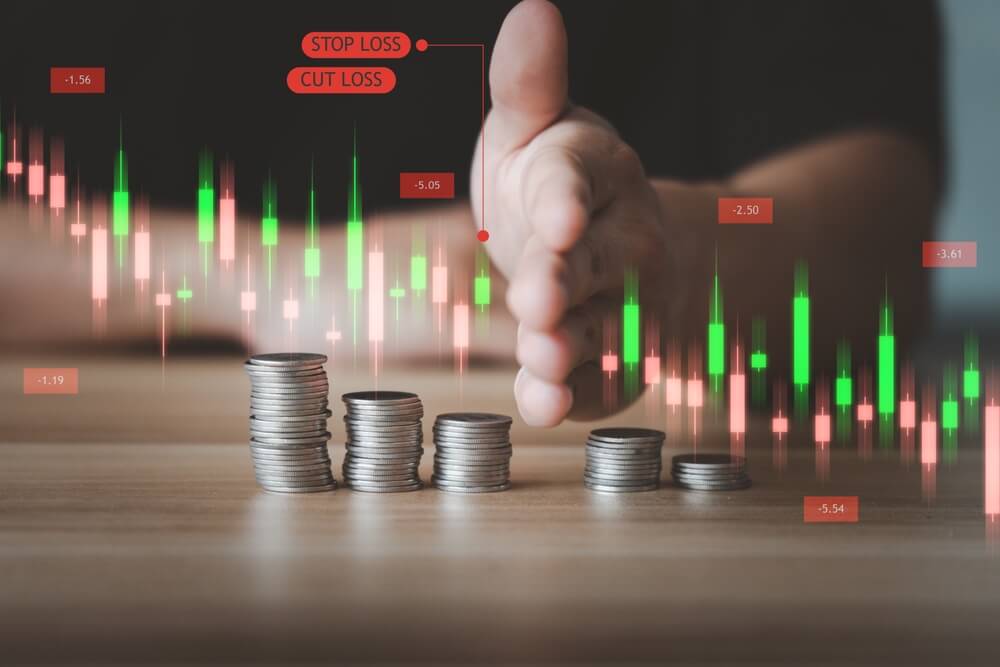
Seeing red on your screen is a normal part of trading, but it’s also the number one trigger for blown accounts. The biggest trap is purely psychological: traders often confuse sticking to a plan with crossing their fingers and hoping for a miracle.
The difference between a professional and an amateur isn’t that the pro never loses. It’s that they follow a clear set of rules. A professional knows exactly why they are sitting through a dip, while an amateur just waits for the market to take pity on them.
Let’s break down how price action actually works and give you a checklist for making calm, rational decisions.
When It Actually Makes Sense to Wait It Out
The market never moves in a straight line. Strong pushes forward are always followed by pullbacks, and everyday volatility often shakes traders out right before the real move happens. It only makes sense to hold onto a losing trade if these three things are true:
- The overall trend is still intact. A short-term dip in an uptrend is perfectly fine, as long as the price hasn’t dropped below a major support level on a higher timeframe. If your key levels are still holding up, the trade is still technically valid.
- You are within your risk limits. The size of your current loss should be a number you calculated before you even entered the market. As long as it hasn’t crossed your personal limit (say, 1% to 2% of your capital) and isn’t pushing you toward a margin call, you are fine.
- Your original reason for entering hasn’t changed. You opened this trade based on a specific signal – maybe a bounce off a key level or a macroeconomic trend. If that original reason is still true, the trade is still true.
If the current dip is just standard market noise or a routine retest of a level, bailing out early makes no sense. All you will do is rack up extra fees and abandon a perfectly good trading setup.

Red Flags: When to Cut Your Losses Immediately
Sometimes, hoping for a turnaround is just lying to yourself. There are specific market conditions where you need to manually close a trade long before your stop-loss is triggered. Watch out for these three scenarios:
- The trend is broken. The price didn’t just dip – it aggressively broke through and closed past the exact support or resistance zone that your entire trade idea was built on.
- Game-changing news just dropped. If interest rates, inflation reports, or major geopolitical events come out completely different from forecasts, the balance of power shifts instantly. Trying to fight a brand-new trend driven by a central bank is a guaranteed way to lose.
- You’re changing the plan mid-trade. Let’s say you opened a quick, short-term trade expecting an immediate reaction, but the price just stalled. Turning a quick day trade into a multi-day hold just because you don’t want to accept a tiny loss is a classic, deadly mistake.

The 3-Question Checklist Before Hitting ‘Close’
When your screen is flashing red, turn off your emotions and ask yourself these three honest questions:
- “Would I enter this exact same position right now, at the current price?” If the answer is no, you have absolutely zero rational reason to keep holding it.
- “Am I expecting a reversal because of the chart, or just because I’m hoping for one?” If you don’t see any actual signs that the move is slowing down (like a spike in buying volume or a reversal candlestick pattern), you aren’t trading – you’re just arguing with the market.
- “How many trades of this size can my account actually survive?” If losing a little more money is going to paralyze your trading for weeks, cut the cord and take the loss immediately.
The Bottom Line
Closing a trade in the red isn’t a failure. It’s simply a business expense – it’s the cost of staying in the game. The market will always give you an unlimited number of new opportunities, but you can only take advantage of them if you still have money in your account.
Learn to clearly separate a routine market correction from a completely broken trade idea. If the original reason you entered the trade is gone, cut your losses without a second thought. But if the price is just moving within your original plan and risk limits? Take a breath, step back, and let your strategy do its work.
The post Hold or Fold? When to Cut Your Losses in Trading first appeared on Online broker AMarkets.
