





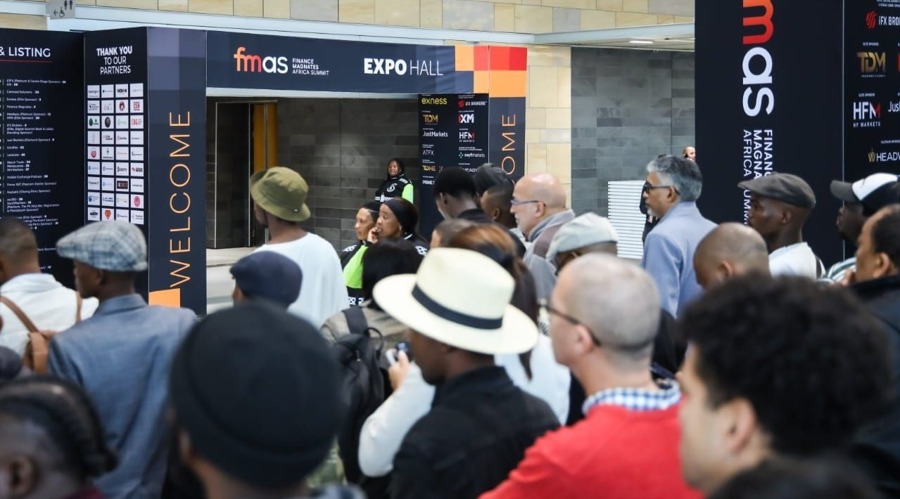
The second day of FMAS:26 in Cape Town opened with a shift toward the specific mechanics of local trading and the often-opaque relationships that drive the retail brokerage industry.
While the first day addressed the structural wild ride of the global market and featured high-level regulatory debates, the second morning turned the lens inward, focusing on how African participants can navigate the volatile assets and marketing networks that define their daily operations.
Domestic Volatility: Trading the Rand
The morning main panel sessions began with a deep dive into South Africa’s most sensitive asset: the ZAR. In a session focused on "gRAND plans," experts dissected how local triggers like budget speeches and MPC decisions interact with global dollar strength.
The discussion featured Richard Anthony Gaskin, Market Analyst at FP Markets South Africa, and Nikhil Joshi, Sales Manager at MH Markets.
- FMAS:26: Survival Tactics and the Search for Signal
- Finance Magnates Africa Summit 2026: Day One Kicks Off
- Exclusive Crypto Event in Cape Town During FMAS:26 by TDME
They argued that while the Rand is home turf for local traders, it is rarely safe ground, requiring a sophisticated understanding of institutional positioning relative to retail sentiment.
Transparency in the Referral Economy
If the Rand provides the volatility, the Introducing Broker (IB) network provides the participants.
This panel pulled back the curtain on the complex incentives that drive the relationship between brokers and their referral partners.
The session featured Mj Givens Kgasi and Nqobile Tembane, hosts of the Industry Chats Podcast; Akinbiyi Saheed Olakunle, Country Manager at Exness; Irene Kanyamaure, Country Manager at CXM; and Blake Francis, Director of Business Acquisitions at Swyft Markets.
One of the cornerstones governing that relationship is trust, something that has been eroded over the years. "The system is saturated with bad actors from the brokers and the IBs themselves," Kanyamaure explains.
And that trust, eventually, trickles down to the client.
The group explored how compensation models like CPA and revenue share shape the advice traders receive, urging for greater transparency across sub-IB networks.
Bridging the Digital Divide with AI
The conversation regarding broker networks reached its logical conclusion by revisiting the technological "structural fixes" discussed yesterday afternoon. While Day One examined how blockchain could bypass slow payment systems, this session looked at how those tools allow the industry to reach deeper into the continent.
Mj Givens Kgasi and Nqobile Tembane returned to lead the discussion alongside Anzill Adams, Founder of Dominion Investment Holdings and Board Member of the Africa Blockchain Institute.
The panel focused on how AI and blockchain create opportunities for brokers and platforms to tap into the informal trading economy. By lowering barriers to entry in underserved communities, these technologies allow the industry to expand beyond traditional financial hubs into the massive, yet often ignored, informal sector.
However, for these technologies to address the disparities that are present, they need to be designed to be fit for purpose
"It's about the design phase in terms of how to sustainably get to making money, particularly from an informal economy perspective," Tembane said.
